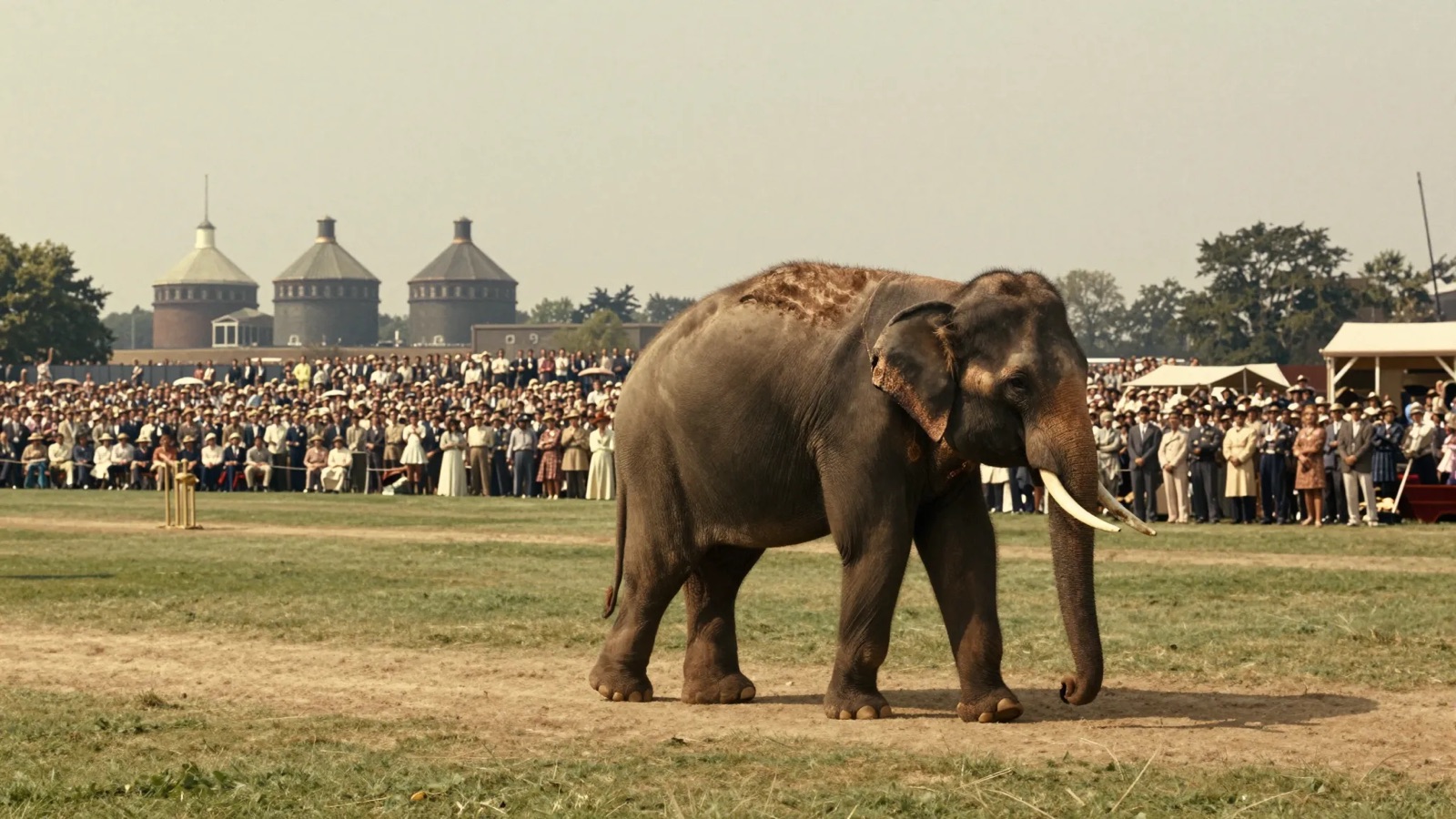
On the fourth morning of the final Test of 1971, an elephant walked around the boundary at The Oval. Her name was Bella, she had been borrowed from Chessington Zoo by Indian supporters, and she was there to bring luck. Nobody in the ground that day could have told you that luck would be needed less than they thought. Within two days India had won a Test match in England for the first time in 39 years of trying, and with it the series.
A summer of firsts
India had arrived in England already carrying a surprise. In the spring of 1971 Ajit Wadekar, newly appointed captain, had led them to a first ever series win in the West Indies, where a 21-year-old opener named Sunil Gavaskar scored 774 runs in his debut series. The England of Ray Illingworth, though, had just won the Ashes in Australia and had not lost a home series for years. The first two Tests of the summer were drawn, the second at Lord's only because rain arrived with India needing 38 more runs and two wickets in hand.
So the sides came to The Oval level, and for three days England looked the stronger. They made 355 in their first innings, with Alan Knott falling ten short of a hundred and John Jameson, a Bombay-born opener, hitting 82. India replied with 284. Farokh Engineer made 59, Dilip Sardesai 54 and Eknath Solkar 44, but a lead of 71 on a wearing pitch felt like a great deal more.
Chandra's hour
What happened on the fourth afternoon has been replayed in Indian cricket conversation ever since. Bhagwat Chandrasekhar, the leg-spinner whose right arm had been withered by polio in childhood and who bowled faster and stranger than any wrist-spinner of his time, took 6 for 38. England were bowled out for 101. Jameson was run out when a drive deflected off Chandra's hand onto the stumps. Brian Luckhurst, John Edrich and Keith Fletcher were all gone cheaply, and Illingworth's side, who had not been dismissed for so few at home in years, left India needing 173 to win.
It was not a big target, but it was a fourth-innings target against a bowling attack that knew the pitch, and the whole of India seemed to know it. Offices in Bombay and Calcutta emptied towards transistor radios. The commentary came through the crackle of the BBC and All India Radio, an over at a time.
The last day
India began the final day on 76 for 2. Wadekar himself was run out for 45, and the story goes that he then went to the dressing room, lay down and fell asleep, to be woken by the news that the match had been won. Sardesai made 40 and Gundappa Viswanath 33, grinding rather than flowing, because the ball was turning and Derek Underwood was bowling. Wickets fell at intervals that kept the radio audience sweating. At 170 for 6 Abid Ali, the Hyderabad all-rounder, came in, and with the scores four apart he cut Luckhurst square for four.
The crowd came over the ropes. Indian supporters who had spent the summer being politely tolerated carried players towards the pavilion. Bella the elephant was declared the real player of the match. When the team flew home they were driven through Bombay in open cars past crowds that stretched for miles, and Wadekar's spinners, Chandra, Bishan Bedi, Erapalli Prasanna and Srinivas Venkataraghavan, became the first Indian cricketers to be famous abroad for what they did rather than where they came from.
Why it matters
Before 1971 India had played Test cricket for 39 years and never won a series outside the subcontinent. In one year they won in the Caribbean and in England, and the belief that Indian cricket could travel began there. Every later triumph abroad, from Lord's in 1983 to the Gabba in 2021, has a thread back to a cut shot off Luckhurst on an August afternoon, and to a day when an elephant did a lap of The Oval.